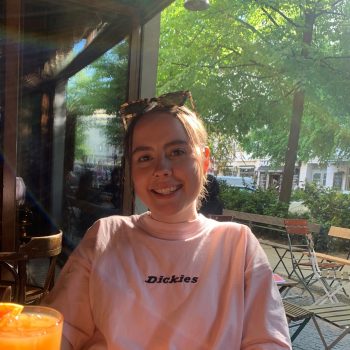
Photo of the head and shoulders of a woman.

Kaila Desai

The Benguela Current system, spanning the coasts of Angola, Namibia and South Africa, is one of the world’s major eastern boundary upwelling systems. It supports highly productive fisheries and influences regional rainfall, yet its long-term variability and predictability remain poorly understood. My PhD investigates whether the Benguela system can be predicted on seasonal to decadal timescales—looking at what drives its variability, whether we can actually forecast it, and how such predictions could inform decisions for fisheries, agriculture, and coastal communities. 
I completed my BSc in Geography and International Relations at Oxford Brookes University, where I developed an interest in oceanography, coastal communities, and climate policy. During my degree, I joined the Equator Research School and later completed an internship with Fi Wi Road at the Royal Geographical Society, where I ran workshops on Indigenous knowledge and climate futures. 

During my undergraduate studies, I became fascinated by how ocean and climate systems work and why they change. A PhD gives me the time and space to go deep on those questions and build the data skills I need to contribute something new to a field I care deeply about. 

CENTA offers structured support in coding, data handling, and research skills that I knew I would need for a data-heavy project like mine. But beyond that, I was drawn to the networkbeing part of a cohort of students across different universities, with access to workshops, conferences, and a genuine research community. 

My goal is to work within atmospheric or ocean sciences, helping to improve predictions of weather and climate systems so that communities and industries can better plan for change. 

Other Student Profiles

Skip to content