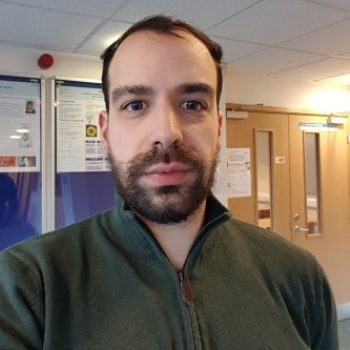
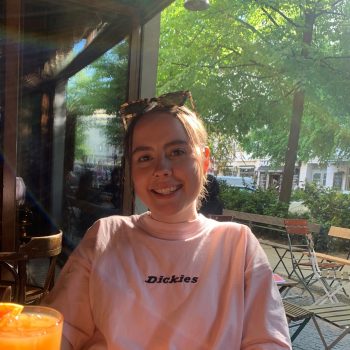
Lauren Edwards
- University of Birmingham
- Dating the Icelandic lowland glaciation: Implications for future Greenland Ice Sheet Vulnerability
- Dr Marco Maffione, Dr Stephen Jones
By understanding the mechanisms behind past ice sheet growth, we can better understand and assess the vulnerability of ice sheets today. This project aims to better constrain the age and onset of lowland glaciation in Iceland and use those findings to further understand the vulnerability of the Greenland Ice Sheet (GIS).
The Tjörnes succession in Northern Iceland holds significant importance due to its in-depth record of changing palaeoenvironments. The main focus of this project is the upper Tjörnes succession, specifically the Breiðavík Group which provides a rare onshore record of the onset and expansion of lowland glaciation interleaved with radiometrically datable lavas.
Using palaeomagnetic analysis and new radiometric ages, an age model of the upper Tjörnes succession will be produced with improved accuracy. This will show whether expansion of the Icelandic Ice Sheet was rapid or prolonged, in turn allowing us to generate a precise model of its evolution over time. These findings can then aid in an assessment of the vulnerability and future behaviour of the GIS.
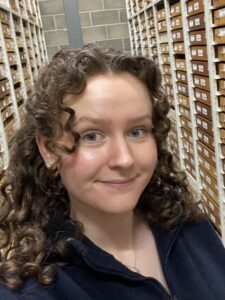
Before beginning this PhD, I completed my BSc in Geology at the University of Birmingham. I then worked at the Sedgwick Museum of Earth Sciences at the University of Cambridge as a Digital Engagement and Collections assistant. This allowed me to develop scientific communication skills and gain experience in making collections more accessible for researchers. I especially enjoyed engaging with aspiring young scientists during our events.
I finished my BSc feeling enthusiastic about pursuing further research especially after completing my undergraduate research project where I could organise my own time and investigate novel theories. Working in the Sedgwick Museum, at the intersection between academia and the public solidified my commitment to doing a PhD. Communicating with the public about past and ongoing research showed the positive impact it can have which inspired me to generate my own new insights and enact positive change.
CENTA stood out to me not just because of the interesting research project but because they provide such a diverse and plentiful array of training. CENTA want you to finish your PhD a well-rounded individual who has qualities valuable not just in academia, but any chosen career path. Their investment in me as a person, not just what I produce at the end of the project, is a significant part of what drew me to this studentship.
Studying here will allow me to develop my knowledge of palaeomagnetism while providing the opportunity to grow in areas such as age and ice sheet modelling. My aim in the future is to continue in research or pursue a career in science communication. However, with all the training and opportunities CENTA provide I will remain open to new possibilities for future careers which I have yet to explore.