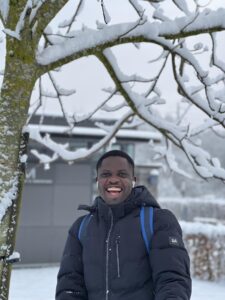
A photo of the head and shoulders of a man standing in front of a snowy backdrop.

Paul Oluwatimileyin Olatunji

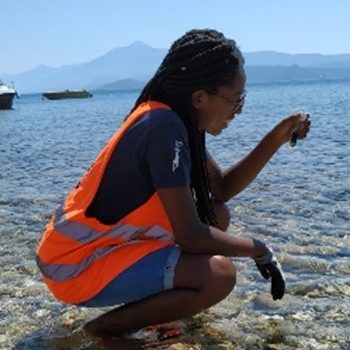
Microplastics continue to pose a serious threat to aquatic environments, yet their behaviour in coastal systems remains poorly understood. My research focuses on investigating how different hydrodynamic processes, along with variations in particle density, influence the fate and behaviour of microplastics in the nearshore environment. 

have a background in Coastal and Marine Resource Management, and during my last role as a visiting researcher, I explored interactions between microplastics and freshwater bivalves to evaluate their potential as bioindicators and tools for bioremediation. Alongside my research experience, I volunteered as the Foreign Hub Lead for Aquaworld, a role I continue to serve in. 
For my career aspirations, undertaking doctoral research is an essential and significant step. I have been deeply motivated to pursue a PhD to develop my research and critical thinking skills further, as I have always viewed research as a meaningful way to contribute positively to society. 

I chose CENTA because of the extensive training opportunities it provides, which help PhD researchers develop a wide range of skills essential both during the doctorate and in future careers. Additionally, the strong support system designed to promote holistic researcher development further strengthened my interest in joining CENTA. 

Studying here will help me develop as an independent researcher, equipped with the skills to make meaningful impact in my future career. My long-term goal is to work in a research-oriented organisation where I can use scientific evidence to inform policies on marine conservation and the mitigation of aquatic pollution. 

Other Student Profiles

Skip to content