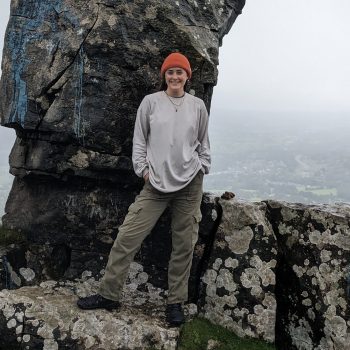
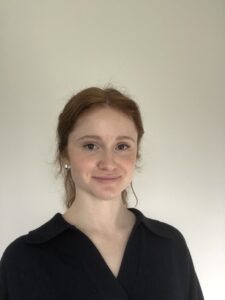
Photo of the head and shoulders of a woman.

Rowan Findler

The Met Office currently have ‘present weather’ sensors at their Operational Land Surface sites. These instruments attempt to provide a present weather code as would traditionally be reported by a human observer at the station. However, the instruments are somewhat problematic (e.g. suspectable to spiders) and expensive. 

This project aims to use machine learning to assimilate a range of observational data together and use it to create a ‘virtual sensor’ for present weather. This project represents the first step of developing a ‘Virtual Sensors’ methodology and there is potential to extend the approach to other problematic parameters (e.g. visibility and grass temperature). 

Whilst undertaking my PhD part-time I am also working parttime at the Met Office as a Foundation Scientist in the Surface Observations R&D Team. Prior to this I completed undergraduate degrees in Geography with Ocean Science at the University of Plymouth and Renewable Energy Systems at the University of South Wales.  

After graduating from my undergraduate degrees, I knew that my time as a student in academia was not over. The opportunity to undertake a PhD meant that I could not only continue my studies, developing as a researcher and as an individual, but also focus on a topic of significant interest to me, which is also imperative to the continued work of the Met Office which make it a world leader in weather and climate science.  

A CENTA Studentship was my first choice when it came to applying for a PhD. The opportunity to study and network with a cohort of likeminded researchers, complete a project in partnership with the Met Office and be a part of a training alliance centrally funded by NERC, all made the decision a no-brainer.  

The additional personal development opportunities available as part of CENTA also played a role in my decision. With training opportunities in scientific and technical skills, personal effectiveness, research management and engagement, impact and enterprise, aimed at helping us to develop professional scientific and transferrable skills beyond those learnt in our day-to-day research. The studentship itself also took away many of the financial stressors often associated with postgraduate study.  
Following my PhD, I hope to remain at the Met Office in the fields of meteorology and climatology, further developing the skills I have obtained in the completion of my PhD and as part of CENTA. I also hope the range of opportunities and skills I have picked up along the way will enable me to apply myself to a wide range of opportunities outside of my day to day role.  

Other Student Profiles

Skip to content