Vivienne Gao
- University of Warwick
- Unravelling the environmental and molecular drivers of host-symbiont specificity in cnidarian-algal symbiosis
- Ed Smith, Erin Gorsich
The decline of global coral reefs is largely due to climate change and ocean warming causing the breakdown of the coral–algal symbiosis essential for coral survival. While it is known that corals can better tolerate increased temperatures associated with climate change when partnered with thermally resistant algae species, genetic specificity between coral hosts and their symbionts limits the range of viable coral-algae partnerships. Using the cnidarian model system Aiptasia spp., my PhD project aims to identify the genetic basis of host–symbiont specificity and to examine how elevated temperature and other environmental stressors influence this relationship. Understanding the mechanisms that constrain or enable symbiont flexibility in cnidarian hosts will be key to predicting coral resilience under future climate scenarios.
I completed my BSc in Marine Biology and Philosophy at Northeastern University (USA), followed by an MSc in Marine Biology through Northeastern University’s Three Seas Program, where I trained as a scientific diver in three marine ecosystems: Boston, Friday Harbor (Washington), and Hawai‘i. I completed my MSc thesis project at Queen’s University Belfast, focusing on population genetics and sympatric speciation in endemic brown trout populations. After graduating, I worked as a research assistant at Trinity College Dublin, studying seaweed population genomics and kelp aquaculture in Ireland. I subsequently moved to the Okinawa Institute of Science and Technology (OIST) as a research intern working on soft coral population genomics and microbiome research.
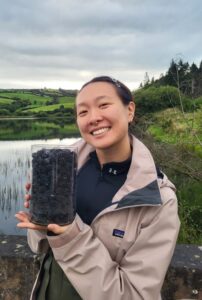
After completing my MSc degree, I initially planned to continue in research as a research assistant. However, after a few years, I realised that I wanted to greater independence to develop and lead my own research projects. A PhD felt like the natural next step to build the skills and expertise needed to contribute meaningfully to the field of environmental research and conservation.
I was initially drawn to this specific PhD project itself, but I was also excited by the opportunity to join a NERC Doctoral Training Partnership. CENTA offers the opportunity to start my PhD with a cohort of new students, providing the chance to build an academic network early-on in my career alongside other researchers working in related, environment–focused fields. I was particularly interested in the diverse training opportunities available, for both technical and interpersonal skills, as well as the annual conferences and cohort events that facilitate collaboration and knowledge exchange between students.
I hope that my future career will allow me to assist in addressing the major environmental and social challenges facing the world today. My long-term goal is to continue down a career path that combines research, activism, and communication, whether as an academic, or through broader engagement with policy and the public. I see this PhD with Warwick and CENTA as a critical step in developing the expertise, credibility, and confidence needed to make meaningful contributions to positive change.