

Tardigrades are renowned for their extraordinary ability to survive environmental extremes including dehydration, freezing, ionising radiation, oxygen limitation and prolonged metabolic arrest. During cryptobiosis, metabolism becomes essentially undetectable, yet individuals can remain viable for years before resuming normal biological activity upon rehydration. Recent studies have identified unique protective proteins involved in DNA and cellular stabilisation, but the contribution of metals and metalloproteins to tardigrade stress tolerance remains almost entirely unexplored. This represents a major knowledge gap in our understanding of how life adapts to environmental extremes.
A growing body of evidence suggests that metals such as manganese may play a crucial role in protecting cells against oxidative damage. In radiation-resistant bacteria such as Deinococcus radiodurans, accumulation of Mn(II)-containing complexes protects proteins from reactive oxygen species generated during irradiation and desiccation. Whether similar strategies exist in tardigrades is unknown. No systematic investigation has been undertaken to determine whether tardigrades possess novel metal-dependent antioxidant proteins that contribute to their remarkable resilience.
This project will address two questions: (i) what metals accumulate in tardigrades during cryptobiosis and subsequent recovery, and (ii) do tardigrades possess previously unrecognised metal-dependent antioxidant proteins?
The research will combine bioinorganic chemistry, advanced spectroscopy and imaging, and molecular biology. Tardigrades will be subjected to controlled environmental dehydration and rehydration cycles. Changes in elemental composition will be quantified using techniques such as ICP-MS, and spatial metal distributions investigated using X-ray fluorescence imaging. Complementary transcriptomic and comparative genomic analyses will identify metal transporters, antioxidant systems, and candidate metal-binding proteins whose expression changes during stress exposure.
Candidate proteins will be produced using recombinant expression systems and characterised using UV-visible spectroscopy, electron paramagnetic resonance (EPR), X-ray absorption spectroscopy and metallomic techniques. Functional assays will determine their ability to bind metals and protect biomolecules under conditions relevant to desiccation and irradiation.
The project will provide the first comprehensive description of metal utilisation in tardigrades and establish whether metal-centred antioxidant mechanisms contribute to survival under extreme conditions. By revealing previously unknown strategies for biological resilience, the research advances understandings of adaptation to environmental stress while identifying potential applications in biotechnology, conservation science, biopreservation and environmental resilience.
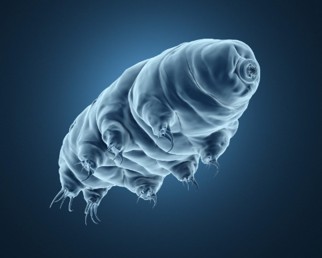
Figure 1: Tardigrades are organisms that survive exposure to harsh environmental extremes, the ultimate microscopic survivors. Developing an understanding of how they are adapted to survive to extreme changes in environment may provide inspiration for how to cope with the effects of climate change.
This project does not offer a CASE studentship
Each host has a slightly different application process.
Find out how to apply for this studentship.
All applications must include the CENTA application form.
Choose your application route
Advanced imaging techniques available at the University of Leicester will be used to determine what metals accumulate in tardigrades during cryptobiosis and in response to environmental stress. Targeted searches for proteins containing these metals will then be carried out, providing a more complete understanding of the role of metals in cryptobiosis and ultimately tune formation and recovery. Identified metalloproteins will be recombinantly expressed to allow detailed biochemical, biophysical, and structural studies using a range of advanced spectroscopic methods including X-ray spectroscopy, cryo-electron microscopy, and infrared microscopectroscopy. Existing collaborations of Ash at national facilities such as Diamond Light Source will be used to carry out further advanced in situ characterisation.
DRs will be awarded CENTA Training Credits (CTCs) for participation in CENTA-provided and ‘free choice’ external training. One CTC can be earned per 3 hours training, and DRs must accrue 100 CTCs across the three and a half years of their PhD.
Training will be provided in a broad range of interdisciplinary skills encompassing biochemical techniques and analytical methods, including FTIR spectroscopy, X-ray spectroscopy, electrochemistry. There will be opportunities for travel to national and international facilities to undertake experimental work, notably Diamond Light Source and the Central Laser Facility (UK), and MAX-IV (Sweden). The successful candidate will be encouraged to present their work at a range of international conferences throughout the course of the PhD.
Year 1: Detailed investigation into the metallome of selected tardigrade species, identification of patterns of metal accumulation in response to stress and preliminary identification of putative metalloproteins.
Year 2: Recombinant synthesis and biochemical/biophysical characterisation of metalloproteins. Use of advanced spectroscopy and electrochemistry to study the anti-oxidant properties of these metalloproteins.
Year 3: Develop in situ imaging methodologies to test the function of metalloproteins in stress response. Biophysical characterisation of metalloproteins as potential triggers for, or recovery mechanisms from tun formation.
Journal:
Roberto Guidetti, Tiziana Altiero, Lorena Rebecchi (2011) ‘On dormancy strategies in tardigrades’, Journal of Insect Physiology, 57 (5), pp. 567‐576. Doi: 10.1016/j.jinsphys.2011.03.003
Amanda L. Smythers, Kara M. Joseph, Hayden M. O’Dell, Trace A. Clark, Jessica R. Crislip, Brendin B. Flinn, Meredith H. Daughtridge, Evan R. Stair, Saher N. Mubarek, Hailey C. Lewis, Abel A. Salas, Megan E. Hnilica, Derrick R. J. Kolling, Leslie M. Hicks (2024) ‘Chemobiosis reveals tardigrade tun formation is dependent on reversible cysteine oxidation’, PLOs One, 19(1): e0295062. Doi: 10.1371/journal.pone.0295062
Lim, S, Reilly, C.B., Barghouti, Z. et al. (2024) ‘Tardigrade secretory proteins protect biological structures from desiccation’, Commun Biol, 7, 633. Doi: 10.1038/s42003-024-06336-w
For any enquiries related to this project please contact Philip Ash, [email protected]
To apply to this project:
Applications must be submitted by 23:59 GMT on Wednesday 6th January 2027.