

Urbanisation has resulted in widespread loss, fragmentation and degradation of freshwater habitats (Dudgeon et al., 2019). However, urban landscapes also contain numerous small waterbodies that may collectively provide important habitat and connectivity. Garden ponds are likely to be particularly abundant across towns and cities and therefore represent a significant, but largely overlooked, component of urban freshwater networks. Despite their small size, networks of garden ponds could provide stepping-stone habitats through otherwise fragmented landscapes, potentially enhancing connectivity. In addition, collectively they may enhance landscape biodiversity in otherwise urbanised and homogenous landscapes (Hill et al., 2015;2021).
Previous research has demonstrated that ponds in the wider landscape can support diverse aquatic communities (Márton et al., 2025). In particular, some research has suggested that small water bodies, including artificial and unique lentic waterbodies (Biggs et al., 2017), may support high numbers of aquatic organisms in addition to those with high conservation value (Cerini et al., 2020). However, little is known garden pond biodiversity and the spatial / biotic variables structuring their communities. We have limited understanding of whether garden ponds function as isolated habitat patches or collectively form interconnected networks that contribute to urban freshwater biodiversity. This knowledge gap limits our ability to assess their cumulative conservation value and incorporate garden ponds into urban freshwater conservation planning.
Urbanisation and connectivity may however facilitate the spread of non-native and invasive species (Haubrock et al., 2026). Garden ponds are frequently created, planted, and managed by people, providing opportunities for human-mediated introductions alongside natural dispersal. Garden ponds may therefore function as both biodiversity refuges and potential invasion pathways, with landscape connectivity and human activity interacting to influence the distribution of native and non-native species.
This project will therefore seek to: i) Quantify the distribution and abundance of garden ponds across the UK; ii) Quantify native and non-native aquatic diversity within garden ponds, and determine the environmental, spatial and biotic drivers; iii) Assess the role of garden ponds in maintaining and enhancing urban freshwater connectivity including in the spread of invasive species; and; iv) Evaluate the effectiveness of wildlife ponds and garden pond-management practices in supporting aquatic biodiversity.
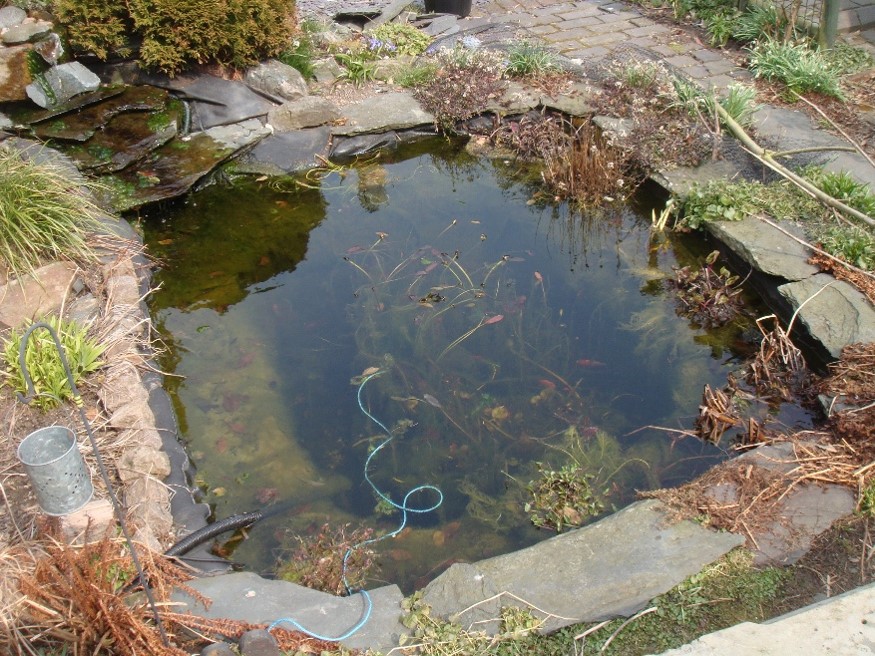
Figure 1: An example of a typical garden pond in Loughborough (photo credit: Matthew Hill).
This project does not offer a CASE studentship
Each host has a slightly different application process.
Find out how to apply for this studentship.
All applications must include the CENTA application form.
Choose your application route
Contemporary ecological sampling of garden ponds will be undertaken to characterize their aquatic biodiversity (focusing on the aquatic macroinvertebrate communities with the possibility to extend to macrophytes) and their wider conservation value. Specific factors contributing to their biodiversity value could be examined such as waterbody connectivity (utilizing geospatial analysis), age, spatial scale (small vs larger ponds), surrounding land-use and the implementation of restoration / management measures. Non-native and native species will be identified. Sampling could be focused on the City of Birmingham where is there an established network of garden pond owners actively engaged in research but could also be centred more locally in Loughborough.
DRs will be awarded CENTA Training Credits (CTCs) for participation in CENTA-provided and ‘free choice’ external training. One CTC can be earned per 3 hours training, and DRs must accrue 100 CTCs across the three and a half years of their PhD.
The supervisory team will equip the student with an interdisciplinary knowledge base and skillset required for this project. The project will forge skills in handling, organising and processing ecological, environmental and geospatial data both in the field and laboratory. Training will be provided in ecological methods including macroinvertebrate identification. Through liaising with collaborators at the Freshwater Habitats Trust, the PhD student will gain skills and training directly relevant to pursuing a career in environmental management, policy and conservation or in academia engaging with applied and real-world research.
Freshwater Habitats Trust
The student will have the opportunity to work with Freshwater Habitats Trust, a leading UK charity dedicated to protecting and restoring freshwater ecosystems. They will provide expertise in freshwater ecology, pond conservation and the role of small waterbodies in supporting biodiversity. The partnership will support knowledge exchange between academic research and practical conservation, ensuring that project findings have relevance for freshwater conservation and management.
Year 1:
Year 2:
Year 3:
Finish remaining primary and secondary data set processing / analysis
Journal:
Biggs, J., Von Fumetti, S. and Kelly-Quinn, M., 2017. The importance of small waterbodies for biodiversity and ecosystem services: implications for policy makers. Hydrobiologia, 793(1), pp.3-39.
Cerini, F., Bologna, M.A. and Vignoli, L., 2020. Nestedness-patterns of Odonata assemblages in artificial and natural aquatic habitats reveal the potential role of drinking troughs for aquatic insect conservation. Journal of Insect Conservation, 24(3), pp.421-429.
Hill, M.J., Wood, P.J., Fairchild, W., Williams, P., Nicolet, P. and Biggs, J., 2021. Garden pond diversity: Opportunities for urban freshwater conservation. Basic and Applied Ecology, 57, pp.28-40.
Hill, M.J., Mathers, K.L. and Wood, P.J., 2015. The aquatic macroinvertebrate biodiversity of urban ponds in a medium-sized European town (Loughborough, UK). Hydrobiologia, 760(1), pp.225-238.
Dudgeon, D., 2019. Multiple threats imperil freshwater biodiversity in the Anthropocene. Current Biology, 29(19), pp.R960-R967.
Márton, Z., Barta, B., Szabo, B., Hamer, A.J., Kardos, V., Laskai, C., Fierpasz, Á. and Horvath, Z., 2025. Effects of urbanisation, habitat characteristics, and management on garden pond biodiversity: Findings from a large-scale citizen science survey. Landscape and Urban Planning, 257, p.105299.
Haubrock, P.J., Tarkan, A.S., Martín‐Forés, I., Katsanevakis, S., Sousa, R., Soto, I., Green, A.J., Kouba, A., Everts, T., Dominguez Almela, V. and Belouard, N., 2026. The spread of non‐native species. Biological Reviews, 101(3), pp.1197-1234.
Further details on how to contact the supervisor for this project and how to apply for this project can be found here:
For any enquiries related to this project please contact Kate Mathers – ([email protected]).
To apply to this project:
Applications must be submitted by 23:59 GMT on Wednesday 6th January 2027.