

Landfills are the third largest source of anthropogenic methane, a potent greenhouse gas that contributes to global climate change. In the UK, remediation of former landfills commonly involves creating forested areas. There is evidence that trees growing on closed landfill sites can contribute to methane emissions (Fraser-McDonald et al., 2022). However, the origin of these emissions is still somewhat uncertain.
In forested wetland ecosystems, which serve as natural analogues to managed landfill environments, complex relationships between communities of microbes influence the production and consumption of methane. For example, studies have identified bacteria within tree stems that reduce methane emissions (Jeffrey et al., 2021). Identifying the microbial populations present in forested landfill sites and their dynamics with trees growing in these environments will aid in pinpointing sources and sinks of methane. Understanding these dynamics will inform UK strategies aimed at mitigating emissions, tackling climate change, and supporting United Nations Sustainable Development Goals (UNSDGs), specifically Goal 13 (Climate Action), Goal 15 (Life on Land), and Goal 12 (Responsible Consumption and Production).
This project aims to address this gap by investigating the influence of tree planting on microbial communities and associated methane emissions or uptake from forested landfills. The project will focus on a multi-faceted approach, combining fieldwork, process-based measurements, laboratory experiments, and microbial analysis to comprehensively understand methane cycling in these environments. Underlying mechanisms will be explored by sequencing microbial communities in the soils, plant rhizospheres, and tree stems to identify the presence and abundance of key methane-cycling microorganisms, such as methanogens (methane producers) and methanotrophs (methane consumers). By comparing these communities in forested and non-forested landfill sites, the project will determine how tree planting influences microbial diversity and activity, and therefore methane fluxes. Additionally, laboratory experiments will provide insights into the metabolic pathways and conditions that promote either methane production or consumption, helping to identify the factors that could be manipulated to reduce emissions.
Overall, this project aims to contribute valuable knowledge to the field of landfill management and climate change mitigation, supporting the UK’s efforts to reduce greenhouse gas emissions and align with the UNSDGs.
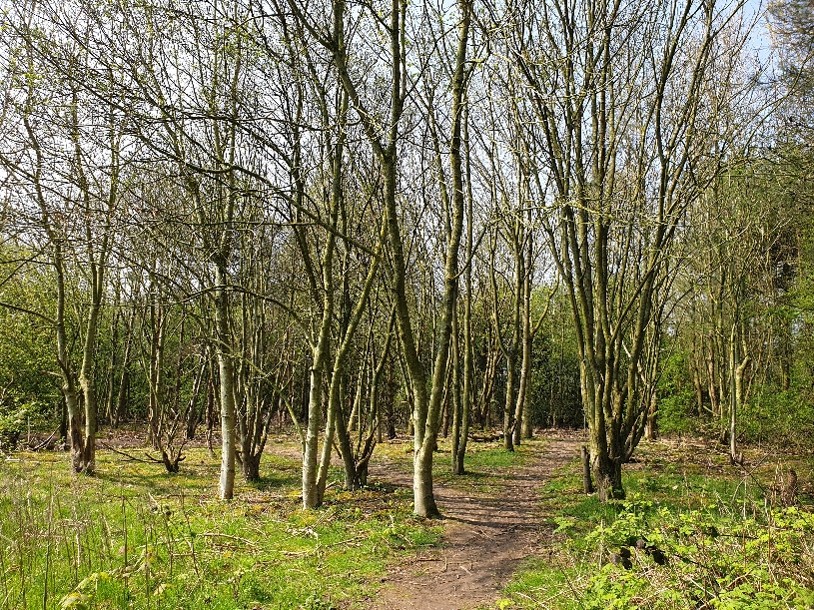
Figure 1: Forested landfill site in the UK.
This project does not offer a CASE studentship
Each host has a slightly different application process.
Find out how to apply for this studentship.
All applications must include the CENTA application form.
Choose your application route
Process-based measurements using cavity ring-down laser spectroscopy will be conducted in a diverse range of landfill sites to quantify methane emissions and uptake. A combination of cultivation dependant and independent techniques will be applied to investigate the role of methane oxidation and production in the soils and plants of landfill environments. This will involve extracting DNA and RNA from environmental samples collected from landfill soils across the UK and identifying: 1) the diversity of methane-cyclers within the landfill and 2) comparing the methane-relevant microbes between the components of the soil, plants, and the different landfill sites. This will be supported by cultivation experiments to enrich and isolate the methane-utilisers identified within these environments, and analytical techniques to understand the environmental context of the samples (gas chromatography and mass spectrometry). The student will have access to a range of additional techniques at the partner organisations.
DRs will be awarded CENTA Training Credits (CTCs) for participation in CENTA-provided and ‘free choice’ external training. One CTC can be earned per 3 hours training, and DRs must accrue 100 CTCs across the three and a half years of their PhD.
The student will be trained in specific, field and laboratory-based techniques (cavity ring-down laser spectroscopy, gas chromatography, DNA extraction, and PCR), analytical geochemistry and culture-based microbiology by members of the research team. The student will also be trained in computer-based techniques.
The student will have access to a range of training and development sessions at the host institution, including academic communication, research design and employability. They will also benefit from additional skills development opportunities offered by the research groups within E&I and EEES, e.g., communication skills, time management, academic writing and more. The student will also develop skills in statistical analysis and presentation of quantitative data.
Dr Susheel Bhanu Busi (CEH) is a molecular ecologist with extensive expertise in microbial ecology, cell fluorimetry and metagenomic analysis of complex environmental samples. He will provide training and supervision in these specialised techniques as well project guidance via supervisory meetings.
Nancy Jones (DEFRA) is a Senior Scientific Officer in the Circular Economy Directorate for Defra. She will contribute to idea development from a waste management and circular economy perspective.
Year 1: Perform a literature review, identify suitable field sites, and plan field and lab experiments. Undertake field work collecting samples and taking process-based measurements from landfill sites. Collect initial emissions data at key timepoints across the first year to account for temperature and season. Complete initial training in laboratory and molecular techniques. Set up enrichments for methane producing and consuming microbes.
Year 2: Perform metagenomic analysis of the soil and plant samples from the landfill field sites and qPCR to assess the diversity and abundance of microbes associated with methane cycling and its variations. Statistically analyse the emissions and geochemistry of the field sites. Present results at a national conference.
Year 3: Perform growth experiments to further investigate the impact of trees on methane production from the landfill. Prepare and submit manuscript regarding the process-based and metagenomic work. Present data at an international conference (e.g. Gordon Applied and Environmental Microbiology). Write and submit thesis.
Fraser-McDonald, A., Boardman, C., Gladding, T., Burnley, S. and Gauci, V. (2022) Methane emissions from trees planted on a closed landfill site, Waste Management and Research, 40(11): 1618-1628. Doi: 10.1177/0734242X221086955.
Jeffrey, L. C., Maher, D. T., Chiri, E., Leung, P. M., Nauer, P. A., Arndt, S. K. et al. (2021) Bark-dwelling methanotrophic bacteria decrease methane emissions from trees, Nature Communications, 12:2127. Doi: 10.1038/s41467-021-22333-7.
Xu, S. and H. Zhang (2022) First evidence for anaerobic oxidation of methane process in landfill cover soils: Activity and responsible microorganisms, Science of the Total Environment, 841:156790. Doi: 10.1016/j.scitotenv.2022.156790.
Macey, M.C. (2024) Genome-resolved metagenomics identifies novel active microbes in biogeochemical cycling within methanol-enriched soil. Environmental Microbiology Reports, 16(2), e13246. Available from: https://doi.org/10.1111/1758-2229.13246
For more information on this project please contact [email protected].
To apply to this project:
You should make your application via The Open University’s applications portal. If you do not already have an account for this portal, you will need to register your interest and will be prompted to create an account. As part of your application, you will need to provide:
Applications must be submitted by 23:59 GMT on Wednesday 6th January 2027.