

Mosquitoes transmit human pathogens such as malaria parasites and dengue virus mostly in tropical regions. The WHO African Region has the largest number of mosquito-borne cases and deaths. Despite the devastating effect on human and animal health, entomological surveys to assess mosquito diversity and transmission risk have largely been reliant on morphological identification due to a lack of field–friendly economical methods to undertake molecular identification. Mosquito morphological identification uses body parts such as wings and legs (and associated scaling patterns) to distinguish species but is limited by a shortage of expert entomologists, the presence of cryptic species in complexes and damage to mosquitoes upon collection. Molecular identification can allow separation of sibling or cryptic species which can be important as hybrid species are often key determinants of transmission risk. Using molecular methods also can result in detection of human pathogens and genetic diversity of mosquito populations can provide an understanding of geographical spread and potential of species to be invasive. The first step in molecular ID is DNA extraction which can be from any stage of mosquito development permitting identification from immature stages, but this often requires significant lab infrastructure. In this PhD project, the student will undertake fieldwork to collect mosquitoes from multiple countries in which existing collaborations are established in the WHO African Region including Senegal and Kenya (Figure 1). The student will also be given access to existing mosquito samples (and extracted genomic DNA) from the Walker lab (University of Warwick) and preserved mosquito specimens at the Natural History Museum (NHMUK) in addition to numerous collaborator collections. The aim of the PhD will be to use a large diversity of mosquito collections from WHO African Region countries to develop a rapid, field-friendly non-destructive method of DNA extraction and economical sequencing to provide genetic information of less well characterised mosquito species. An optimised DNA extraction method will be assessed to determine if this permits mosquito species identification using sanger sequencing of mosquito barcoding regions and if gDNA is able to be used for Oxford Nanopore technologies (ONT) long read sequencing to provide rapid mosquito genomic data whilst balancing the cost of library preparation and sequencing.
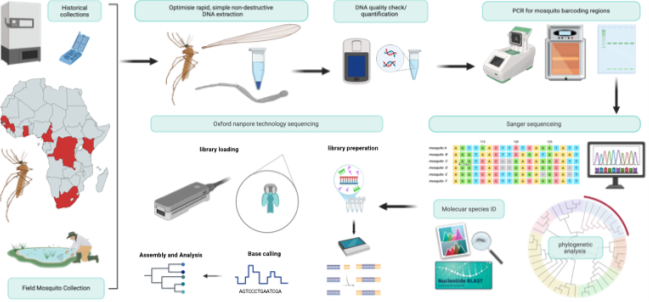
Figure 1: Summary of the PhD project highlighting the different methods and experimental themes proposed.
This project does not offer a CASE studentship
Each host has a slightly different application process.
Find out how to apply for this studentship.
All applications must include the CENTA application form.
Choose your application route
Fieldwork will be undertaken in WHO African Region countries including Senegal and Kenya with well-established collaborators of the Walker lab. Field sites known to contain a diversity of mosquito species will be used for mosquito sampling using collection methods such as light traps. Collected mosquitoes and existing specimens from the Walker lab and NHMUK will be subject to dissection and DNA extraction to develop a rapid, non- destructive method. DNA extraction methods such as the PCR Biosystems Rapid Extracts kits will be used and then gDNA quality and quantity assessed. Sanger sequencing targeting mosquito barcoding genes will be used to determine mosquito species, and phylogenetic analysis will reveal species relatedness. Selected species that are not well characterised will undergo Oxford Nanopore technologies (ONT) long read sequencing to provide rapid mosquito genomic data. ONT library preparation and sequencing will be optimised to provide an economical and field friendly pipeline.
DRs will be awarded CENTA Training Credits (CTCs) for participation in CENTA-provided and ‘free choice’ external training. One CTC can be earned per 3 hours training, and DRs must accrue 100 CTCs across the three and a half years of their PhD.
The student will benefit from the medical entomology expertise and collaborative network in the Walker lab. We have undertaken collaborative research focused on mosquito collections with postgraduate students across five WHO African Region countries including Kenya, DRC, Cameroon, Senegal and Guinea. The student will also learn molecular analysis of samples including sanger and Oxford nanopore technology sequencing in collaboration with the genomics facility at SLS, UW. The Walker lab has expertise in mosquito bioinformatics and has an established record in entomological surveillance. The student will also participate in international conferences and undergo institutional visits in the WHO African Region.
Dr. Erica McAlister is a world leading expert entomologist and museum curator and the Natural History Museum (NHMUK) and is the principal curator for Diptera (true flies). Dr. McAlister has significant experience on mosquito identification including a project aiming to recover DNA from historic samples in collaboration with the Wellcome Sanger Institute and international partners. Dr. McAlister will provide expert advice on identification of mosquitoes and how to recover DNA from historical samples. In addition to the research being undertaken at NHMUK, Dr. McAlister has significant experience with public engagement that will enhance the student project.
Year 1: Mosquito field collections in collaboration with WHO African Region partners. Preliminary testing of DNA extraction methods from existing Walker lab samples.
Year 2: Visit to Natural History Museum to learn expertise in mosquito morphology and DNA recovery from historical samples. Further testing of methodologies and assessment of molecular mosquito ID using Sanger sequencing.
Year 3: Selection of samples and methodological development of Oxford Nanopore technologies (ONT) long read sequencing to provide rapid mosquito genomic data. ONT library preparation and sequencing will be optimised to provide an economical and field friendly pipeline.
ACFORD-PALMER, H., TADESSE, F. G., MANKO, E., PHELAN, J. E., HIGGINS, M., OSBORNE, A., KRISTAN, M., WALKER, T., BOUSEMA, T., MESSENGER, L. A., CLARK, T. G. & CAMPINO, S. 2025. Genome wide population genetics and molecular surveillance of insecticide resistance in Anopheles stephensi mosquitoes from Awash Sebat Kilo in Ethiopia. Sci Rep, 15, 16443.
BISIA, M., JEFFRIES, C. L., LYTRA, I., MICHAELAKIS, A. & WALKER, T. 2020. A Comparison of Adult Mosquito Trapping Methods to Assess Potential West Nile Virus Mosquito Vectors in Greece during the Onset of the 2018 Transmission Season. Insects, 11.
BODDE, M., NWEZEOBI, J., KORLEVIC, P., MAKUNIN, A., AKONE-ELLA, O., BARASA, S., GADJI, M., HART, L., KAINDOA, E. W., LOVE, K., LUCAS, E. R., LUJUMBA, I., MAQUINA, M., NAGI, S., ODERO, J. O., POLO, B., SANGBAKEMBI, C., DADZIE, S., KOEKEMOER, L. L., KWIATKOWSKI, D., MCALISTER, E., OCHOMO, E., OKUMU, F., PAAIJMANS, K., TCHOUASSI, D. P., WONDJI, C. S., AYALA, D., DURBIN, R., MILES, A. & LAWNICZAK, M. K. N. 2024. Genomic diversity of the African malaria vector Anopheles funestus. bioRxiv.
CANSADO-UTRILLA, C., JEFFRIES, C. L., KRISTAN, M., BRUGMAN, V. A., HEARD, P., CAMARA, G., SYLLA, M., BEAVOGUI, A. H., MESSENGER, L. A., IRISH, S. R. & WALKER, T. 2020. An assessment of adult mosquito collection techniques for studying species abundance and diversity in Maferinyah, Guinea. Parasit Vectors, 13, 150.
CHATTERLEY, L., HULL, N., HUGHES, I., SOUGOUFARA, S., MEEK, O., CEYRAN, M., DHOKIYA, V., BANDIBABONE, J., ADALA, C., CUNNINGHAM, E., AWANDU, S. S., NKONDJIO, A., HUGHES, G., HEINZ, E. & WALKER, T. 2025. Optimising the use of Oxford nanopore sequencing technology for detection of <em>Wolbachia</em> bacterial endosymbionts in <em>Anopheles</em> mosquitoes. bioRxiv, 2025.06.16.659891.
GYSIN, G., URBANO, P., BRANDNER-GARROD, L., BEGUM, S., KRISTAN, M., WALKER, T., HERNANDEZ, C., RAMIREZ, J. D. & MESSENGER, L. A. 2022. Towards environmental detection of Chagas disease vectors and pathogen. Sci Rep, 12, 9849.
HABA, Y., PIPPOP CONSORTIUMDOUBLE, D., KORLEVIC, P., MCALISTER, E., LAWNICZAK, M. K. N., SCHUMER, M., ROSE, N. H., MCBRIDE, C. S., AARDEMA, M. L., AFONSO, M. O., AGRAMONTE, N. M., ALBRIGHT, J., ALHO, A. M., ALMEIDA, A. P. G., ALOUT, H., ALTEN, B., ALTINLI, M., AMARA KORBA, R., ANDREADIS, S. S., ANGHEL, V., ARICH, S., ARSENAULT-BENOIT, A., ATYAME, C., AUBRY, F., AVILA, F. W., AYALA, D., AZRAG, R. S., BABAYAN, L., BEAR, A., BECKER, N., BEGA, A. G., BEJARANO, S., BEN-AVI, I., BENOIT, J. B., BOUBIDI, S. C., BRADSHAW, W. E., BRAVO-BARRIGA, D., BUENO-MARI, R., BUSIC, N., CABANOVA, V., CABEJE, B., CAPUTO, B., CARDO, M. V., CARPENTER, S., CARRETON, E., CHOUAIBOU, M. S., CHRISTIAN, M., COETZEE, M., CONNER, W. R., CORNEL, A., CULVERWELL, C. L., CUPINA, A. I., DE WOLF, K., DEBLAUWE, I., DEEGAN, B., DELACOUR-ESTRELLA, S., DELLA TORRE, A., DIAZ, D., DOOL, S. E., DOS ANJOS, V. L., DUGASSA, S., EBRAHIMI, B., EISA, S. Y. M., ELISSA, N., FALLATAH, S. A. B., FARAJI, A., FEDOROVA, M. V., FERRILL, E., FONSECA, D. M., FOSS, K. A., FOXI, C., FRANCA, C. M., FRICKER, S. R., FRITZ, M. L., FRONTERA, E., FUEHRER, H. P., FUTAMI, K., GHALLAB, E. H. S., GIROD, R., GORDEEV, M. I., GREER, D., GSCHWIND, M., GUARIDO, M. M., GUAT NEY, T., GUNAY, F., HAKLAY, E., HAMAD, A. A. E., HANG, J., HARDY, C. M., HARTLE, J. W., HESSON, J. C., HIGA, Y., HOLZAPFEL, C. M., HONNEN, A. C., IONICA, A. M., JONES, L., KADRIAJ, P., KAMAL, H. A., KAMDEM, C., KARAGODIN, D. A., et al. 2025. Ancient origin of an urban underground mosquito. Science, 390, eady4515.
JEFFRIES, C. L., TANTELY, L. M., KADRIAJ, P., BLAGROVE, M. S. C., LYTRA, I., ORSBORNE, J., AL-AMIN, H. M., MOHAMMED, A. R., ALAM, M. S., GIROD, R., AFRANE, Y. A., BINO, S., ROBERT, V., BOYER, S., BAYLIS, M., VELO, E., HUGHES, G. L. & WALKER, T. 2024. Mitochondrial and microbial diversity of the invasive mosquito vector species Culex tritaeniorhynchus across its extensive inter-continental geographic range. Wellcome Open Res, 9, 18.
KORLEVIC, P., MCALISTER, E., MAYHO, M., MAKUNIN, A., FLICEK, P. & LAWNICZAK, M. K. N. 2021. A Minimally Morphologically Destructive Approach for DNA Retrieval and Whole-Genome Shotgun Sequencing of Pinned Historic Dipteran Vector Species. Genome Biol Evol, 13.
TANTELY, L. M., GUIS, H., RAHARINIRINA, M. R., AMBININTSOA, F. M., MIHARISOA, S., ANDRIAMIARIMANANA, M. R., RAKOTOARIVONY, I., ANDRIANANDRASANA, M. F., NEPOMICHENE, T. N., RAZAFIARIMANGA, Z. N., AYALA, D., GARROS, C., CETRE-SOSSAH, C., HERAUD, J. M., TRAN, A., WALKER, T. & GIROD, R. 2026. Determining factors of the blood feeding behaviour of mosquito vectors of West Nile and Rift Valley fever viruses in Madagascar. Sci Rep, 16.
For any enquiries related to this project please contact Professor Thomas Walker – https://profiles.warwick.ac.uk/u2175130-tom-walker. E-mail: [email protected].
Dr. Erica McAlister – https://www.nhm.ac.uk/our-science/people/erica-mcalister.html
To apply to this project:
Applications must be submitted by 23:59 GMT on Wednesday 6th January 2027.