Kane Lindsay
- Loughborough University
- From Pixels to Phenotypes
- Haibin Cai
There are hundreds of millions of specimens housed in libraries (herbaria) worldwide. Many are digitized and is easily accessible online, but the information contained within these images remains less accessible, as the analysis of specimens typically requires physical measurements, interpretation of in-hand or digitized specimens, or invasive methods. This project will explore standard protocols for digitising analytical imaging of specimens, focusing on carnivorous plants. It will develop artificial intelligence and statistical analysis methods to automatically measure components of plant phenotype (e.g., morphology, flowering).
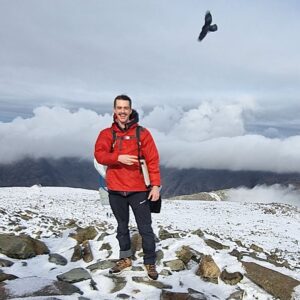
Before my PhD I studied at Xi’An Jiaotong-Liverpool University in Suzhou, China for six months, the capital of UNESCO classical gardens in the country. In my free time I was lucky to visit many outstanding natural landscapes and led workshops at the university on horticulture and community gardening. While in China, I applied to a CENTA-funded PhD which combined my interest in gardening with the technical AI skills I learned during my MSc scholarship at the Mohamed bin Zayed University of Artificial Intelligence (MBZUAI) in Abu Dhabi, UAE. Right after my MSc I worked on a science internship at the Royal Botanic Gardens, Kew which opened the door to ecological research including the PhD studentship I am undertaking.
I considered doctoral research during my MSc at MBZUAI because I wanted to continue working on the development and particularly the application of experimental research which translates high-level academia and the newest technical developments into realised impact which helps people and environments.
I originally planned to go into industry after graduating from my master’s degree and wait until a funded PhD project appeared which was very specific to my interests and technical skills, however I found this project through CENTA which fit my skillset well so went straight into this instead.
I am interested in CENTA because it fills an important role in extending funded opportunities in experimental and cutting-edge research to students outside of the capital city by hosting them at specialist and highly ranked central English universities. CENTA’s connections to external industry partners allowed me to continue my association with RBG Kew while studying at Loughborough University.
I want to use this opportunity with CENTA to build a foundation of my own successful research and develop an industrial network which enables me to continue working with outstanding organisations who wish to apply the latest AI advancements to their experimental work.
Overall, I hope to gain further global opportunities which allow me to explore more of the natural world while contributing to its preservation.